| American Daylight Time |
|---|
|
Canada Canada follows time zones similar to the ones found in the US. At the beginning of 2026 four areas of Canada followed a time zone that is effectively "permanent DST" (clocks moved forward before ending the seasonal changes). In 2026 additional provinces and territories of Canada have moved to extend "permanent DST" to cover all of western Canada from Saskatchewan west to the border with Alaska. A US move to "permanent DST" would match these changes. Eastern provinces have expressed the desire to move to "permanent DST" in coordination with neighboring US states. 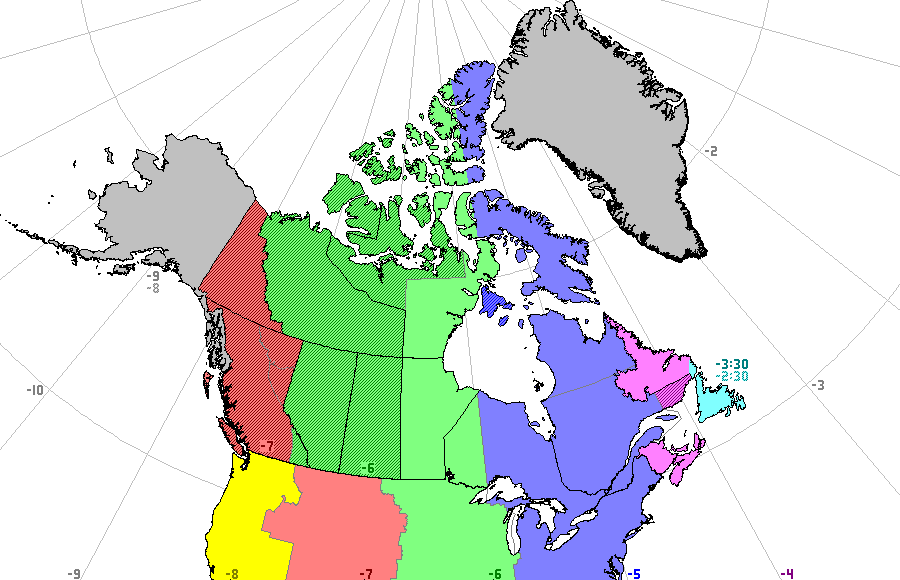 Based on active proposals the entire western half of Canada will be on Permanent DST at the end of 2026. (Areas shaded above.) Detailed Canadian History - Canadian moves to Permanent DST Year of change: 1960 Saskatchewan; 1972 Dawson Creek BC; 1973 Yukon -08; 1980 Yukon PST/PDT; 2015 Fort Nelson BC; 2020 Yukon -07; 2026 British Columbia -07 (March); 2026 Alberta, Northwest Territories, Cambridge Bay NU -06 (November); Mexico As of November 2022, most of Mexico no longer follows daylight saving time. The main central part of Mexico follows "Zona Centro" (UTC-06) with cities near the US border allowed to follow US time zones. The western portion of Mexico follows "Zona Pacifico" (UTC-07). Baja California currently follows US PST/PDT ("Zona Noroeste") and the southeast Mexico state of Quintana Roo follows "Zona Sureste" (UTC-05). 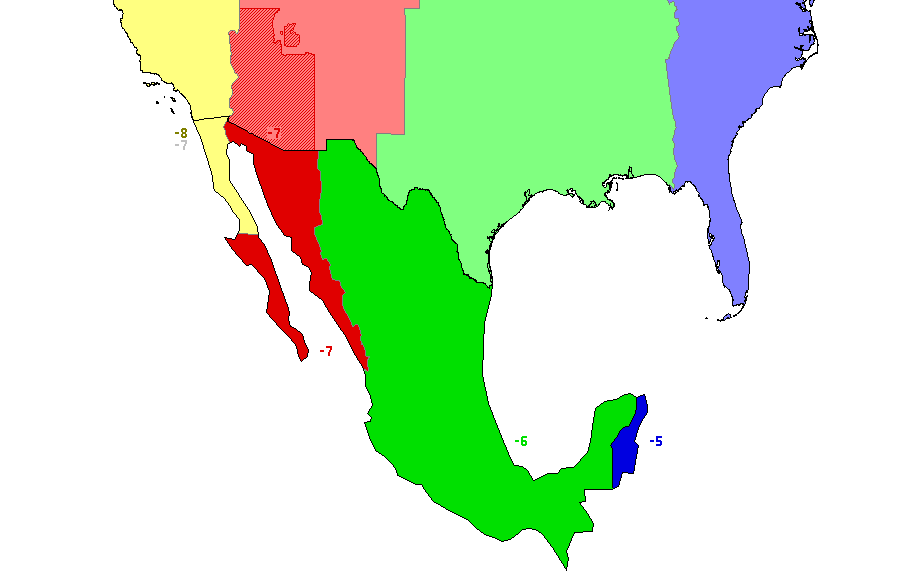 If the Sunshine Protection Act passes in the United States the time zones will align as shown. This map assumes Baja California will follow California's new definition of -7 and Arizona will remain in their current -7 time zone. Any adjustments in central Mexico (where UTC -5 in the US will be north of UTC -6 in Mexico) is unknown. 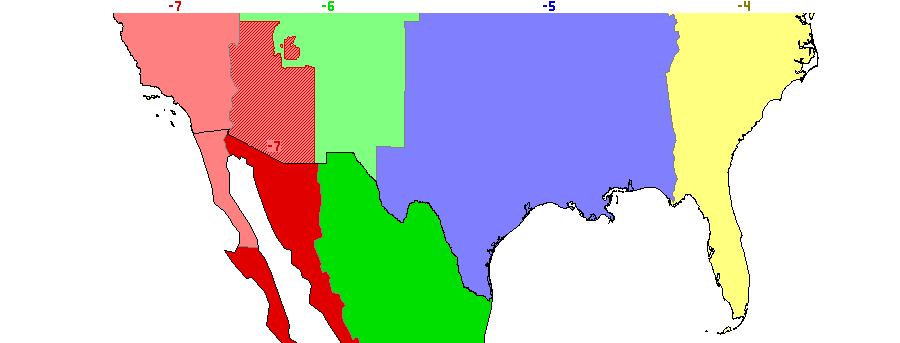
|