| American Daylight Time - Natural Time |
|---|
Proponents of "Natural Time" who support setting noon for a time zone to "solar noon" will be disappointed with permanent DST. No location in the continental US will have their noon match "solar noon". In most of the country noon on the clock will be up to two hours after the average "solar noon". The average "solar noon" was used for this map.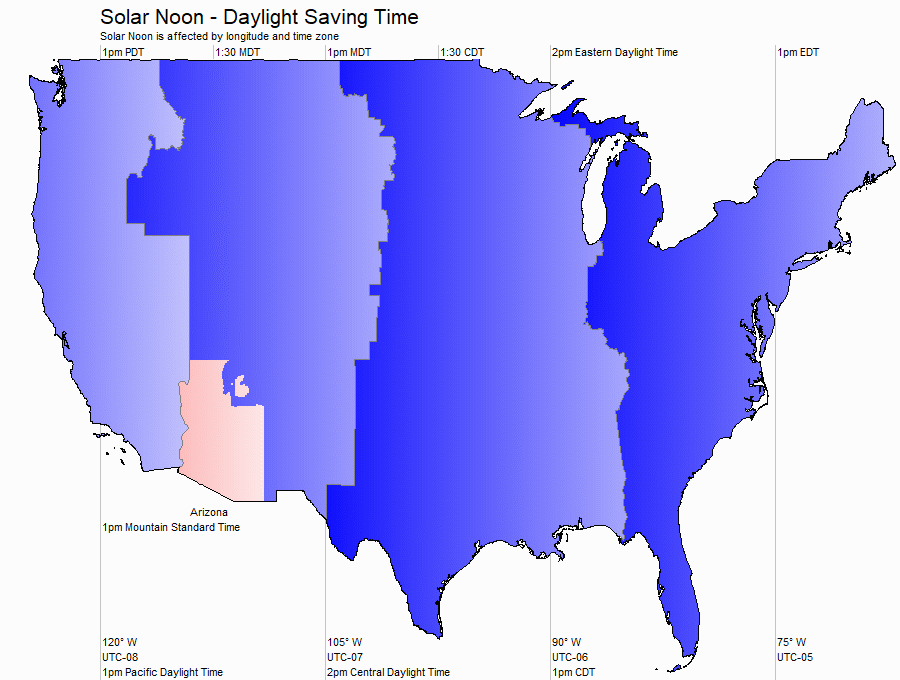 The darker areas on the west of each time zone are further away from a precise "solar noon". Arizona has been shaded in red to denote the year round observance of Mountain Standard Time. The meridians shown at the bottom of the map are the center lines used by "solar noon" proponents for each hour west of the prime meridian that passes through Greenwich England. Basing time zones on "solar noon" is an arbitrary decision based on defining noon as the middle of the day. With the traditional first shift job in the US being 9am to 5pm it can be argued that 1pm is the middle of the day. The 9a-5p first shift has expanded to an 8a-5p schedule (hour lunch) or 8a-4:30p (half hour lunch) in offices where employers prefer an early start.  Construction and factory jobs often start earlier with a 7-3 base schedule allowing for more work to be done in cooler hours and for longer shifts extending into the late afternoon instead of the evening hours (for example, four 10 hour days running 7a-5p). Where the selection of a time zone becomes most noticed is on the extreme days of the year. Most complaints about daylight saving time focus on the latest sunrise time in winter (which occurs a few days after the winter solstice). Opponents do not want the latest sunrise to occur any later. Proponents of DST are willing to give up a morning hour for an afternoon/evening hour of sun. The maps below focus on two specific times of day: 8:30am and 5:30pm. Sunrise and sunset are defined as full sunlight. Dawn and dusk are defined as when the sun is below the horizon at the first and last appearance of light (twilight). 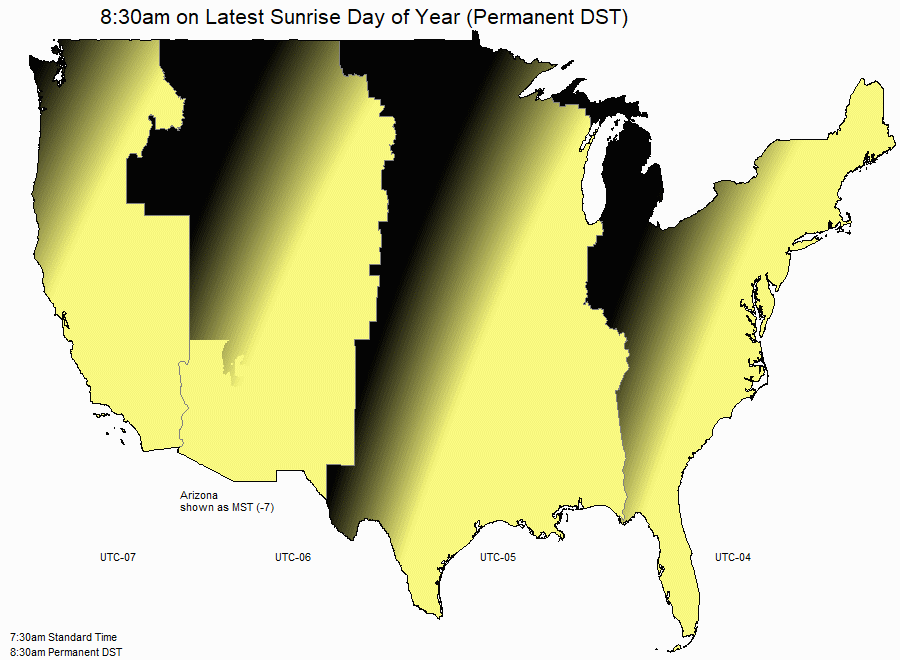 The map above shows the amount of daylight present in each time zone at 8:30am on the latest sunrise day of the year (with Permanent DST). In the black areas the sun has not begun to rise (it is before dawn). In the yellow areas the sun is fully risen before 8:30am. The area where the color fades is the twilight between dawn and sunrise at 8:30am. This map illustrates the additional "morning darkness" created by moving to permanent DST. Note that in the eastern part of each time zone the sun has risen and in the western part of each time zone the sun has yet to rise, despite the entire time zone being at 8:30am. Also note that due to the longer winter days in the south of the country the sun rises earlier than at the same longitude in the north of the country. This creates the angled curve with more daylight in the south. The map below shows the amount of daylight present in each time zone at 5:30pm on the earliest sunset day of the year (with Permanent DST). In the yellow areas the sun has not begun to set at 5:30pm. In the black areas the sun has already completely set before 5:30pm (after dusk). The area where the color fades is where it is between sunset and dusk at 5:30pm (twilight). Note that in the eastern part of each time zone the sun has set and in the western part of each time zone the sun has yet to set. This map illustrates the additional "afternoon sunshine" provided by moving to permanent DST. 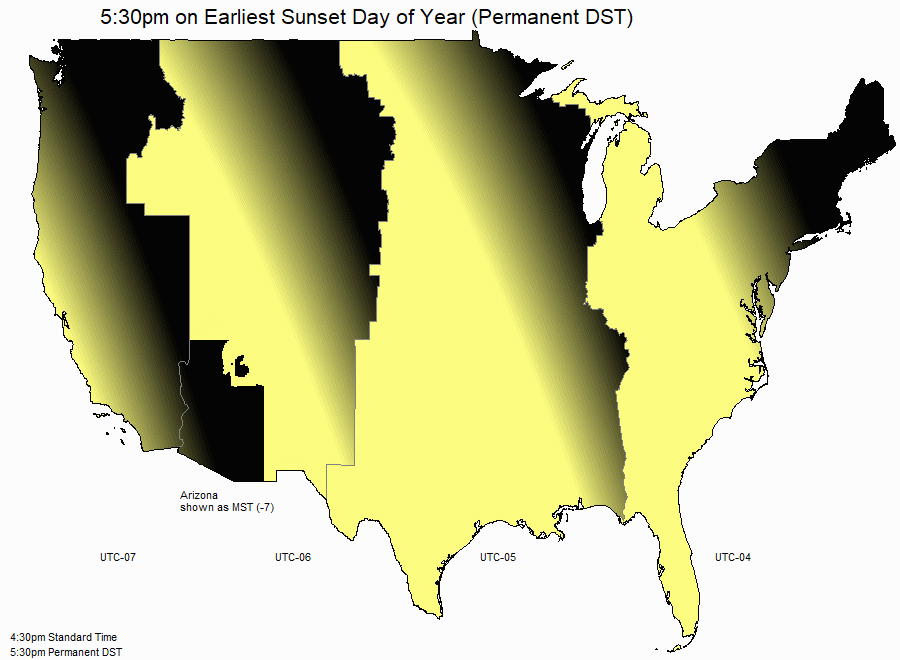 For comparison, the maps below show the amount of daylight available at 8:30am and 5:30pm Standard Time (no permanent DST). Standard time results in nearly the entire nation being in darkness at 5:30pm (local time). 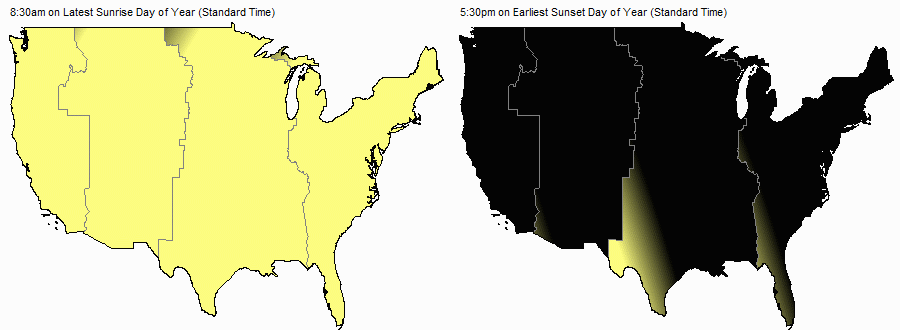 The desire to "freeze the clock" seems to be gaining popularity. Which time to use, the Standard Time of the past or Daylight Time currently used eight months per year, is a point of contention. As a comparison, here are two midwestern cities: 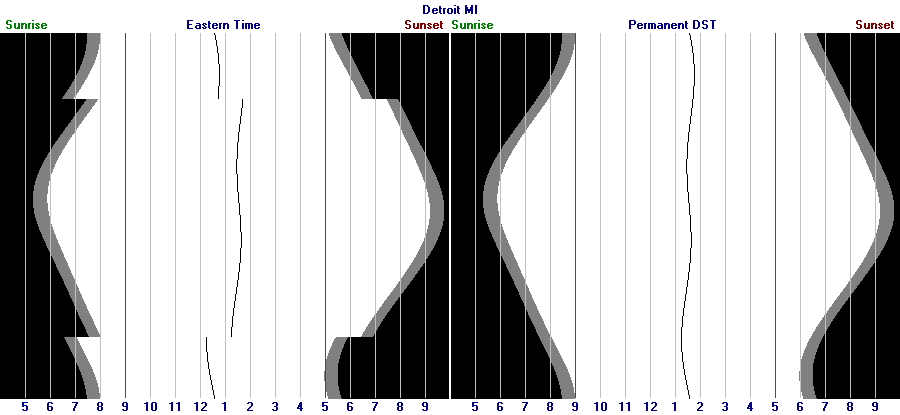 Detroit will receive the benefit of a 5:59pm earliest sunset in winter at the cost of a 9:01am latest sunrise. Chicago will receive the benefit of a 5:19pm earliest sunset in winter at the cost of a 8:18am latest sunrise. 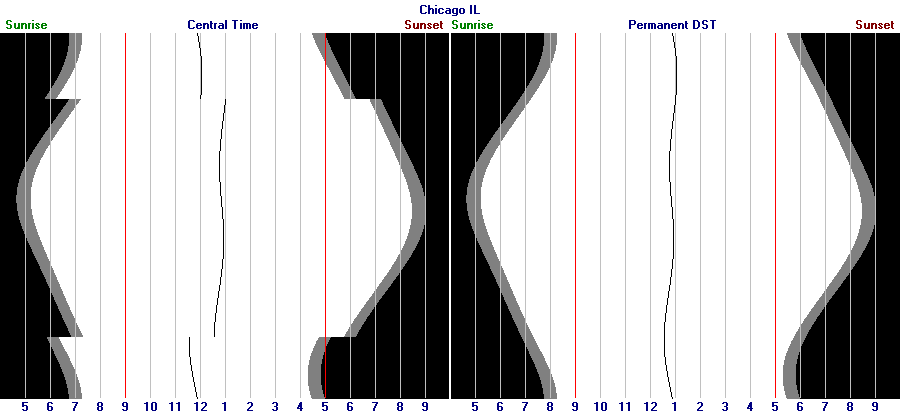 Click here for additional cities. Avoiding clock changes requires a choice of where the hour of winter sun will best serve the country. Whether it be in the morning while people are headed to work or school or in the afternoon/evening when people are headed home. Proponents of permanent DST want the hour of sun to be at the end of the day. An hour of daylight that can be used for the drive home or for after school activities. Influences on Daily Sleep Schedules There are many influences on the sleep schedules of Americans. Most people wake up in the morning on a clock schedule that is based on a time when they need to be at work or their children need to leave for school. Times set by employers and school systems that are not strictly determined by the availability of daylight. If such schedules were controlled by daylight, employers and schools would have later hours in the dark hours of winter and earlier hours during the longer days of summer. While some employers make make such adjustments the majority do not. The Centers for Disease Control (CDC) recommends that the school day start no earlier than 8:30am. Yet 66% of schools start their days before 8:30am with the average school start nationwide at 8:03am. This decision shows that schools have other interests in mind than strictly following this CDC guideline. Often those interests are after school activities and the employer work schedules of the children's parents. Employers seem to be even more bound to the clock. Work starts at a defined time regardless of the availability of sunlight. Time zones are based on the convenince of commerce. Work schedules are often set to be compatible with offices and interstate partners hundreds of miles away in the same time zone. Working with partners in another time zone is possible but requires constant coordination to remind the partner what time zone each party is in. Sleep times are not driven by the time the sun sets. Sleep times are heavily influenced by evening activities such as televised sports and entertainment. When Prime Time TV ends at 11pm the day is extended by late newscasts and late night TV shows that run as late as 1:05am. Viewers in the Central Time zone get a slight reprieve as they can watch TV an hour earlier (on their clocks) than Eastern Time but their end of day is not dictated by the sun. Viewers in Mountain Time and Pacific Time zones receive delayed feeds that match the same local times as Eastern Time airings. Opponents of Permament DST will point to a later sunset hour as a loss of sleep but entertainment is a much larger influence than the sun on people's bedtimes. |