| American Daylight Time | |
|---|---|
|
The Sunshine Protection Act The US Congress is working on a law that will officially end daylight savings time by effectively setting the clocks ahead one last time and remaining on the advanced time zones. The actual mechanics of the law is to redefine the standard time zones used by the US to be one hour ahead of the current standard times. (EST becomes four hours behind UTC instead of five. CST becomes five hours behind UTC instead of six. MST becomes six hours behind UTC instead of seven. PST becomes seven hours behind UTC instead of eight. Hawaii and Alaska also get an extra hour. All nine US time zones are affected.) After the adjustments the option to follow daylight saving time is removed except for the states/territories/possessions who are currently not following DST (Arizona, Hawaii, Puerto Rico, Guam and the Northern Mariana Islands). These areas will have the option to remain on their current time zone or spring forward into the newly defined time zones. While "freezing the clock" has become more popular in recent years the decision over which time to remain on comes down to whether people prefer an earlier sunrise or a later sunset. The Sunshine Protection Act was first introduced in 2018 and has been reintroduced in every session of Congress since. The furthest the bill has progressed was in 2021 when it was passed by the senate but was not debated in the house. In 2026 the proposed act was attached to a transportation bill and will progress through congress as part of that bill. (More details) If the current proposal is adopted, sunrise will occur after 9am a few days per year in several parts of the country. The earliest sunset will be after 5pm in most of the country. This is the trade off of changing the time zones. Standard Time These two maps are shaded for standard time and show the latest sunrise and earliest sunset experienced each year. Over the course of a year the sun will rise no later and set no sooner than shown on these maps. The dividing lines have been adjusted since time zones were first regulated in 1918 but these extremes have applied every year except 1942-1945 when the United States observed Permanent DST as "War Time". 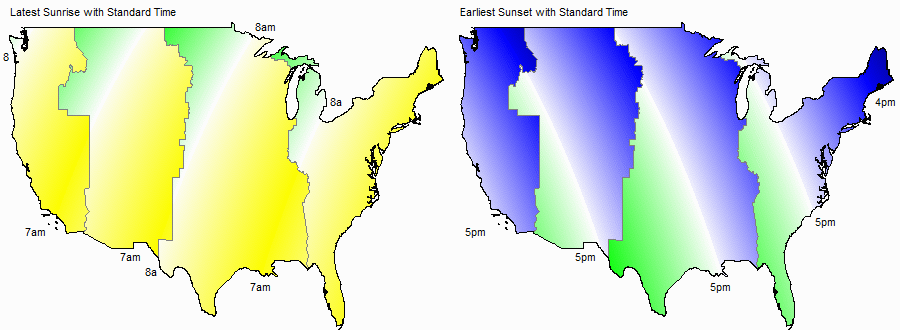 Time zone divisions are set "for the convenience of commerce" with nearly all adjustments moving lines west, including more areas in eastern time zones. Shown here is the gradual shift west of the division between the central time zone and the eastern time zone. The current division is the gray line through each image. State lines are not shown except as a time zone division. 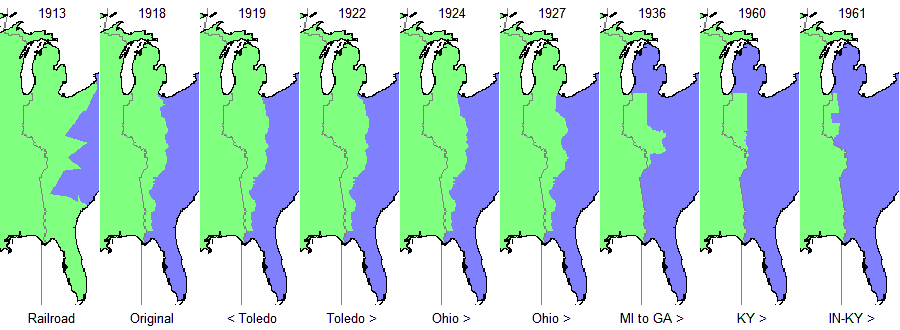 1913 represents railroad time zones based on drawing lines between named cities. The federal government began drawing exact lines in 1918. Prior to 1967 observance of DST was regional with some areas observing DST on different dates or not at all with no federal law preventing variances. The Uniform Time Act of 1966 regulated Daylight Saving Time nationwide, setting nationwide dates for the beginning and end of DST and allowing states to opt out. 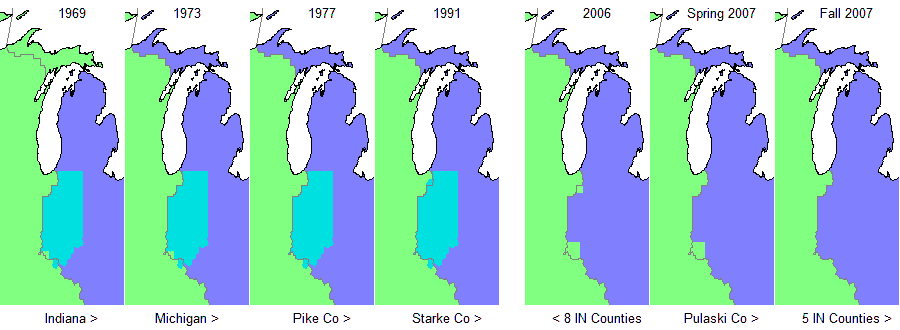 After passage of the Uniform Time Act of 1966 the western half of Indiana moved to eastern time with the exception of the counties nearest Chicago and Evansville. Indiana exempted the state from daylight saving time (affecting the areas in cyan). The upper peninsula of Michigan moved to eastern time except counties closest to Wisconsin. Two additional Indiana counties moved to eastern time prior to Indiana passing a law repealing their exemption in 2005 (effective 2006). At the request of the state of Indiana the US DOT held hearings to adjust the division line. Six of the eight counties moved to central time returned to eastern time. The number of weeks DST is followed has increased from 1918 to the current standard introduced in 2007.  Each move of the division line to the west provided an additional hour of afternoon/evening sun for the area affected. Each increase in the number of weeks daylight saving time was observed provided an additional hour of afternoon/evening sun during the added weeks. (An added afternoon/evening hour is at the cost of a morning hour of sun.) Permanent DST The map below illustrates the earliest sunset time if the proposed change to "permanent DST" becomes law. Areas in yellow will have their earliest sunset after 6pm. Areas in green will have their earliest sunset between 5pm and 6pm. Areas in blue will have their earliest sunset before 5pm. Later sunsets is the benefit of Permanent DST. Note the areas receiving the largest benefit from the change include the most populated cities in the northern United States. 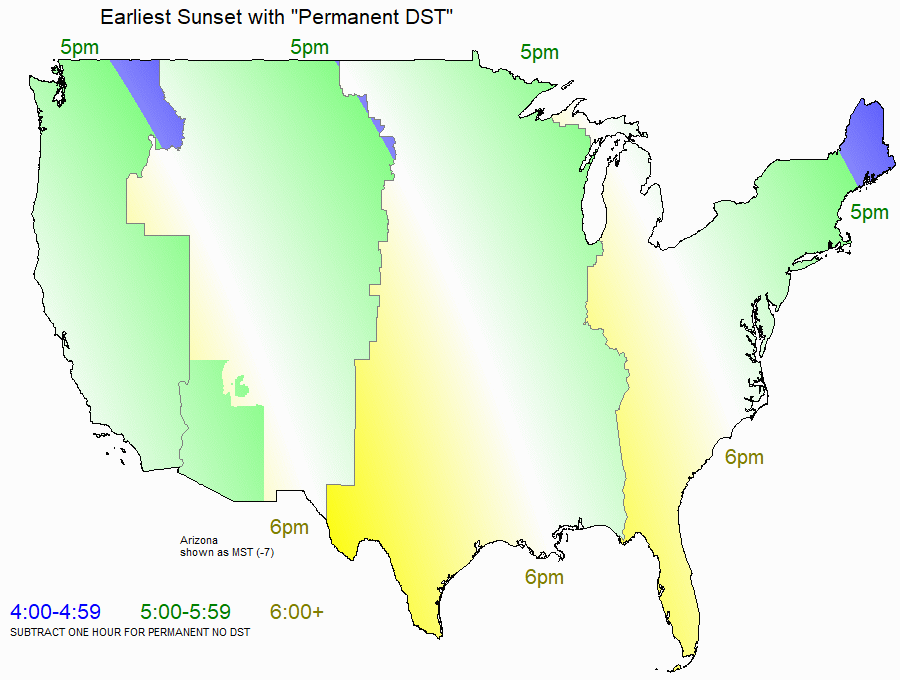 (Permanent DST was observed from 1942 to 1945 as "War Time" as an effort to support the war effort by saving energy.) (DST was extended in 1974 and 1975 as an effort to save energy during an energy crisis. Permanent DST was passed but repealed for Oct 1974-Feb 1975.) The cost of adjusting clocks for a later sunset is a later sunrise. The map below illustrates the latest sunrise times across the continental US, based on the adoption of "permanent DST". The blue areas will have a latest sunrise after 9am. The green areas will have a latest sunrise between 8am and 9am. The yellow areas will have a latest sunrise before 8am. Northern cities such as Detroit and Indianapolis will have sunrises near or after 9am. All areas with a later than 9am sunrise will also have a later than 5pm sunset with some areas with a sunset after 6pm. 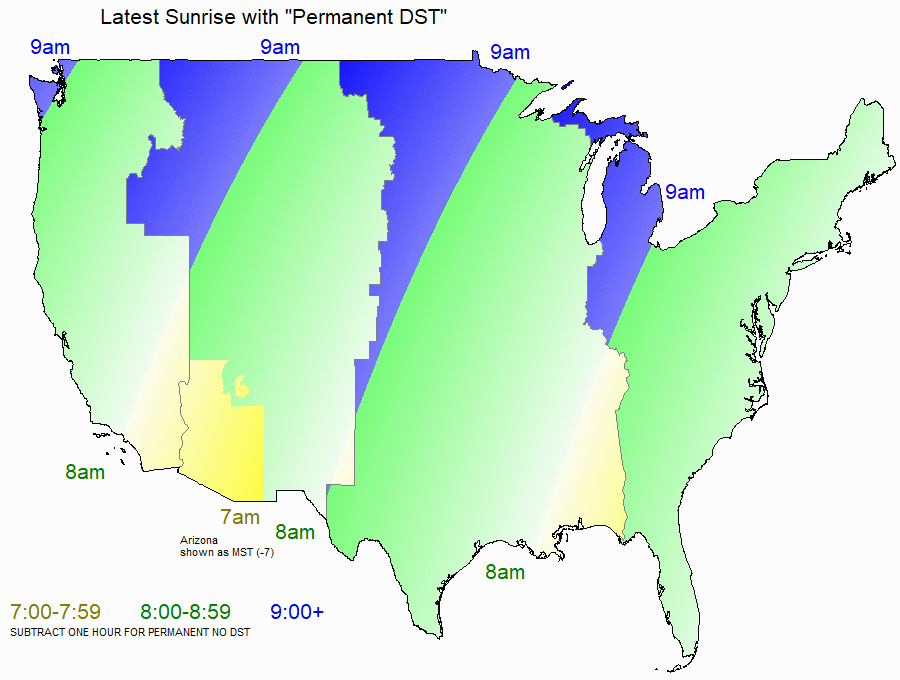 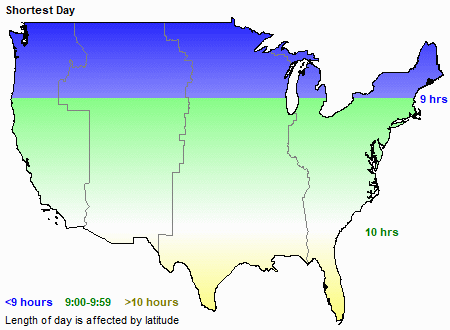 Southern states will be less affected by the change. The shortest days of the year across the southern US are ten hours vs the nine hour shortest days seen across the northern US. The length of the shortest day of the year is shown to the right. Note that the maps above show extremes (a few days in late December and early January). Sunrise will be before 9am and sunset after 5pm nationwide most of the year. The move to "permanent DST" is being driven by people who prefer the hour of sun at the end of the day instead of at the beginning of the day. Sunrise and Sunset in Selected Cities | |
| Neighboring Countries | - Canada moves to Permanent DST, Mexico moves to Permanent Standard Time |
| Legal Details | - SUBCHAPTER IX—STANDARD TIME with proposed modifications |
| Permanent DST and Natural Time | - A detailed look at sunrise and sunset |